
Large scale fast charging: Mission impossible?
Denne artikkelen ble oppdatert for over ett år siden, og kan inneholde utdatert informasjon.

Is it at all possible to fast charge when all cars become electric? Electric heaven or hell during Easter traffic? Hang on through this expert throwback to the Nordic EV Summit.

In two articles we look back on a very successful Nordic EV Summit. 720 participants, 50 speakers and 40 exhibitors from in total 33 nations all made their important contributions.
In the first we summed up the different perspectives on electrification from Nissan and Audi.
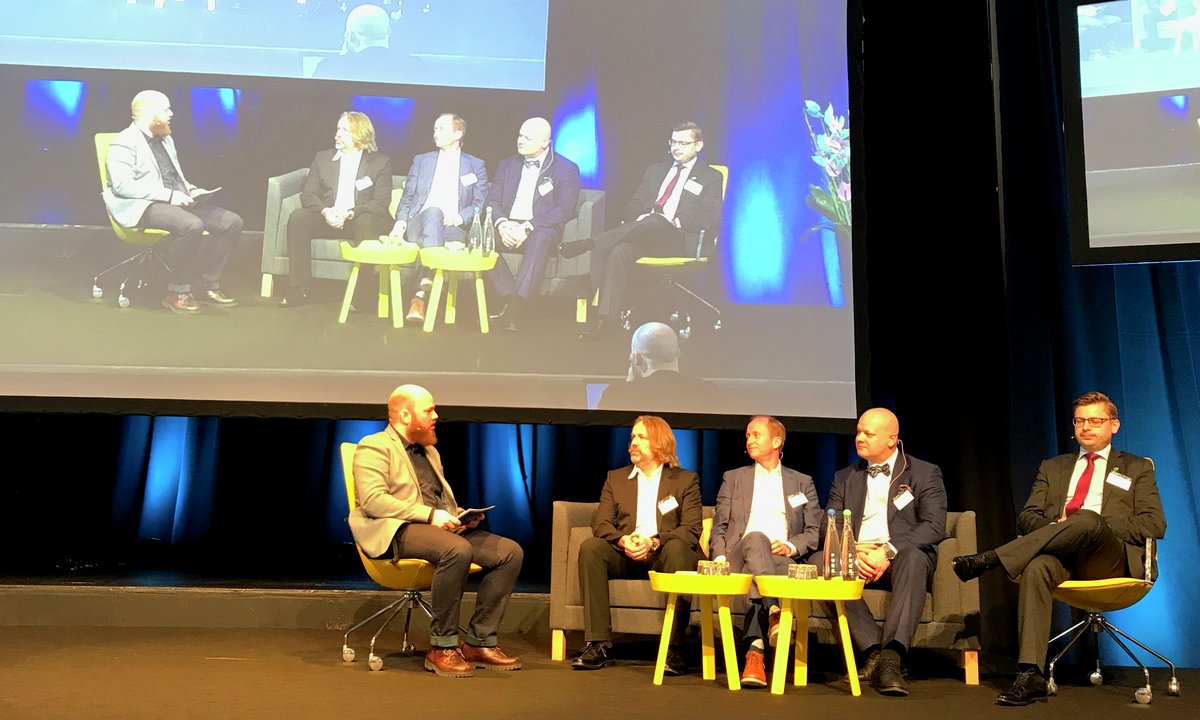
Today we bring an rather long extract from the session where the Norwegian EV Association´s Head of Analysis / Consultancy and conference co-chair Erik Lorentzen asked both important and challenging questions about future fast charging to Jan Haugen Ihle, CEO, Northern Europe IONITY, Rami Syväri, CEO, Fortum Charge and Drive, Ole Henrik Hannisdahl, Managing Director, Grønn Kontakt AS and Tore Harritshøj, CEO, E.ON Denmark and E-mobility Nordic. (Hereafter: JHI, RS, OHH and TH).
How will public charging networks scale up to 100% electric transport the coming decades? Is it even possible? How fast will fast charging be in the coming years? What are the experiences from the Norwegian fast charging operators in the world’s most advanced EV market? How many (fast) chargers will we need in the future?
Read PDF handouts from the speakers at Nordic EV Summit 2018
But first; let´s have their four brief introductions.
JHI: «In November 2016 four big OEMs from Germany, Volkswagen, Daimler, BMW and Ford announced a joint venture (IONITY) to establish high power charging network to make driving around Europe with an EV possible. 350 kW charging, partner owned stations and an average of six charging outlets on each location. Our business model is to be a pure CPOCharge point operator More (charge point operator). The customer will have an agreement with, for example, one of the OEMs or an EMP (the company that provides the service, interface and invoicing to the customer).»
«Excellent. How about E.ON?»
TH: «In the Danish market we just reached 1 million transactions. With only 10,000 BEVs that is actually quite good. We saw the Norwegian market, and what you have been doing up here, setting the standard for the whole world, as a market to look into. We think the solutions we provide in Denmark, Sweden and Europe also should be available in Norway. We will put up 180 fast chargers around Europe. 20 will be in Norway and 20 in Sweden. You will be able to move from Trondheim to Rome.»
«Rami, you have been around for a few years in this game…»
RS: «We had already been into charging for a while when we commercialized services in Fortum Charge & Drive in 2011. We started off inn Norway, Sweden and Finland providing charging services for «first movers», businesses and municipalities. We then started building infrastructure and are now the leading provider of charging services in the Nordics, running a network of more than 1,900 chargers in the region and have around 15 percent of all quick chargers in Europe. We have learned a lot from Norway and the growing mass market.»
«And last, Ole Henrik!»
OHH: «I have been in this business since 2009. I have been to conferences like this since 2009 and I can tell you that conferences in 2009 did not look like this. They were more or less held in a shed outside the hotel and drawing attention from about ten people (laughs from the) having visions about the future. It´s quite amazing to sit here and experience this. It´s been an interesting journey, and it´s far from finished. We´re in the middle of it. We´re starting to get some pathways to the future. So we are a one-stop-and-shop charging company. That means that own and operate our fast charging infrastructure. We invested roughly 100 MNOK into that segment last year. We will probably keep that up. As well as solutions for homes, apartment buildings, office buildings and public charging. An entire eco system. We invest because we think it´s a profitable business. We also believe strongly that it has to be profitable in order to scale.»
«One of the most important learnings from Norway: We can show that charging can scale commercially. We´re essentially telling the rest of the world that if you manage the transition into EVs you will have a customer driven charging market. The good news is that in Norway there are actually customers. We can listen to them, learn from them and try to figure out their behaviour. Everything from user experience, pricing, locations. We want to be where the customer is. We don´t want the customer to come to us. We want to be inside the customer journey. And if we get this right in Norway… we try, we fail and we try again and fail some more. Eventually we get to the right way to do it. We strongly believe that what we learn here can be applicable to other countries.»
 «Are you already starting to make a profit in the Norwegian market?»
OHH: «It´s a question of definition. If I was to run our existing network, and just run it, let´s say we just keep staff to do customer service and stop building more chargers. Yes, then we will be profitable. However, we don´t want to stop here. We want to keep growing. For that reason we´re not profitable as a company yet, because we´re still in the expansion and investment phase. But yes, actually we would be profitable if we wanted to.»
«I think we´ll start the further questions with IONITY and E.ON as you are new to the Norwegian market. Where are you planning to build the new fast charging stations? In cities? Between cities?»
TH: «We will build the infrastructure where the demand is, first of all. And we see that demand in destination charging is sort of covered. What we need right now is charging to connect cities and areas. The way we are entering the Norwegian market, for starters, is building the ultra fast charging stations across the Norwegian market.»
«Can you see in your customer data that people in cities are actually using the nearby fast chargers instead of charging at home?»
TH: «They are using it as a supplement. In the future it will shift. In the data we have seen from other markets, not being in the Norwegian market until now, there´s a shift towards using public charging more.»
«How large fast charging stations are you planning to build?»
TH: «The 20 stations will deploy 150 kW charging power. There will be 4-6 chargers in each location.»
«Are you already starting to make a profit in the Norwegian market?»
OHH: «It´s a question of definition. If I was to run our existing network, and just run it, let´s say we just keep staff to do customer service and stop building more chargers. Yes, then we will be profitable. However, we don´t want to stop here. We want to keep growing. For that reason we´re not profitable as a company yet, because we´re still in the expansion and investment phase. But yes, actually we would be profitable if we wanted to.»
«I think we´ll start the further questions with IONITY and E.ON as you are new to the Norwegian market. Where are you planning to build the new fast charging stations? In cities? Between cities?»
TH: «We will build the infrastructure where the demand is, first of all. And we see that demand in destination charging is sort of covered. What we need right now is charging to connect cities and areas. The way we are entering the Norwegian market, for starters, is building the ultra fast charging stations across the Norwegian market.»
«Can you see in your customer data that people in cities are actually using the nearby fast chargers instead of charging at home?»
TH: «They are using it as a supplement. In the future it will shift. In the data we have seen from other markets, not being in the Norwegian market until now, there´s a shift towards using public charging more.»
«How large fast charging stations are you planning to build?»
TH: «The 20 stations will deploy 150 kW charging power. There will be 4-6 chargers in each location.»
 «Is there something specific you learn from the Norwegian market that influences how you do things in the rest of the world? You have a fast charging station in India, for instance.»
RS: «Norway is by far the leading country. It´s the only mass market in the world. We´re applying all the learnings into other markets. Last year we set up the first three chargers in India. Of course it´s a very interesting market.»
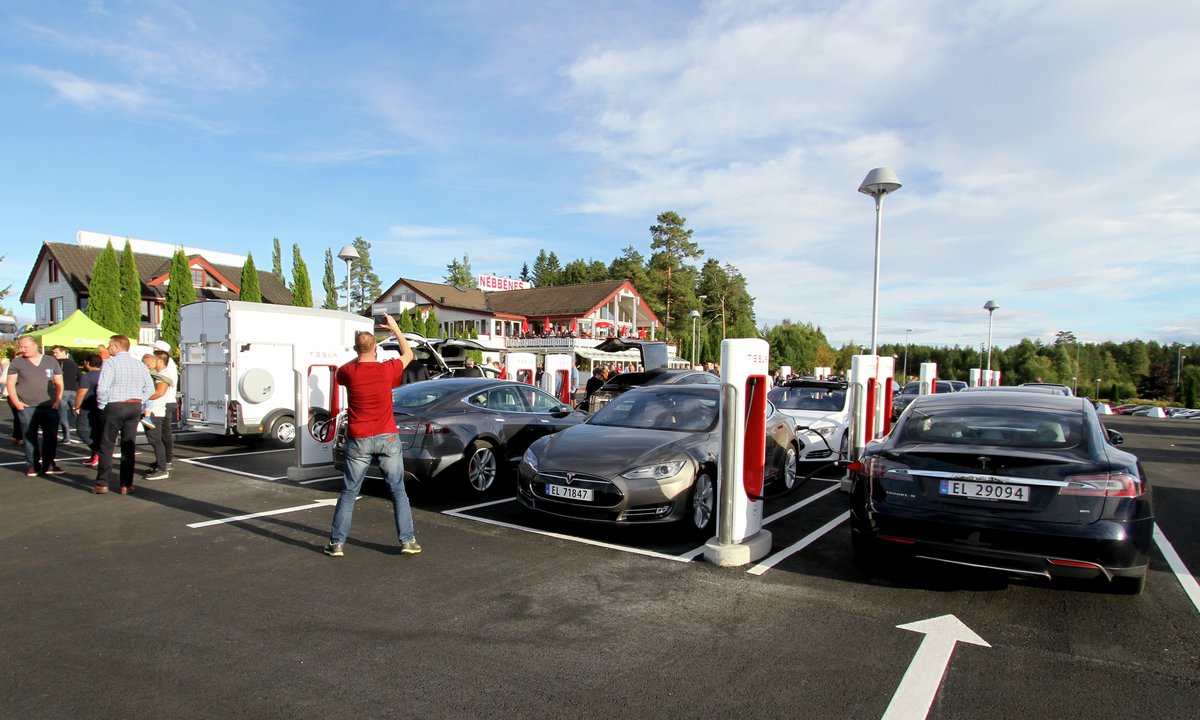
TH: «One of our most important learnings is that people don´t want to wait in front of a charger. Time will be one of the most scarce resources in the future. In that case we have learned from Tesla. When they deploy new stations they put up a lot of outlets. In the future no one will drive from Trondheim to Oslo or from Copenhagen to Munich and be aware that they need to wait 40 minutes to get access to a fast charger. Then the business will not survive. Therefore we need to deploy chargers that will allow people to charge when they get there. That means more chargers at once and build further when the market develops.»
«Is there something specific you learn from the Norwegian market that influences how you do things in the rest of the world? You have a fast charging station in India, for instance.»
RS: «Norway is by far the leading country. It´s the only mass market in the world. We´re applying all the learnings into other markets. Last year we set up the first three chargers in India. Of course it´s a very interesting market.»
TH: «One of our most important learnings is that people don´t want to wait in front of a charger. Time will be one of the most scarce resources in the future. In that case we have learned from Tesla. When they deploy new stations they put up a lot of outlets. In the future no one will drive from Trondheim to Oslo or from Copenhagen to Munich and be aware that they need to wait 40 minutes to get access to a fast charger. Then the business will not survive. Therefore we need to deploy chargers that will allow people to charge when they get there. That means more chargers at once and build further when the market develops.»
 «Do you agree it´s getting better?»
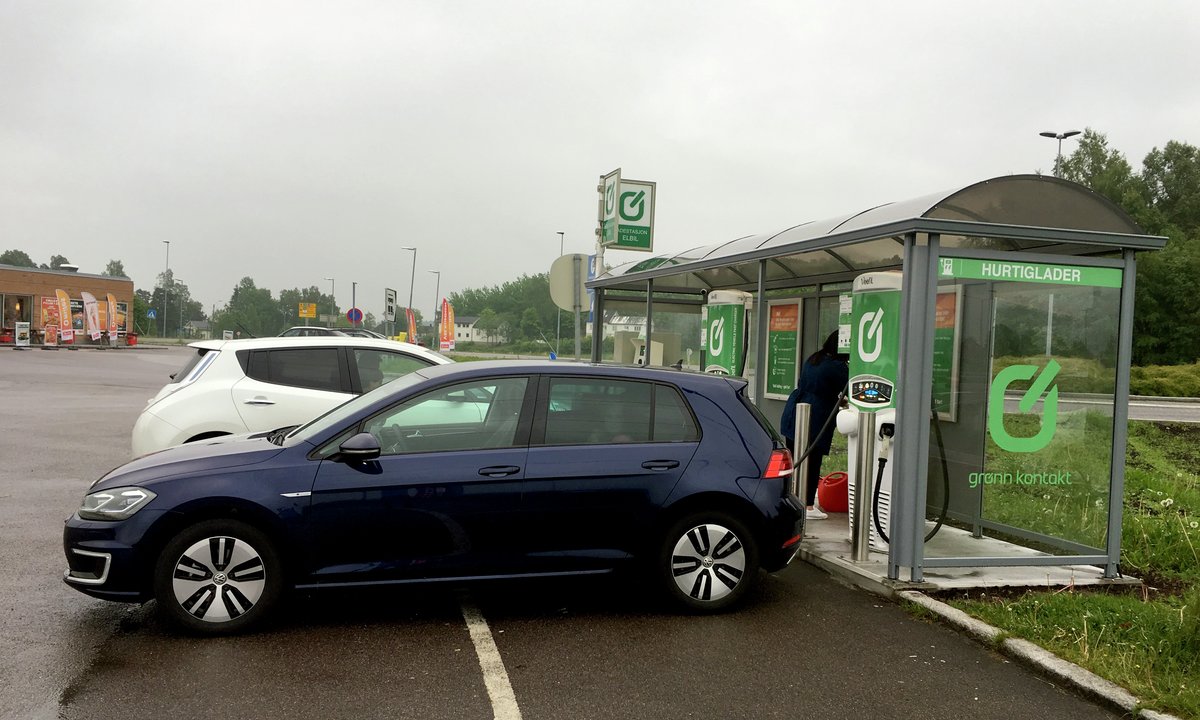
JHI: «Yes, it has improved a lot. I´ve been in the industry for seven years, and big steps forward have been made related to quality of the hardware. Quite a few weekends I´ve been driving around with the family, restarting chargers so they could work. That has become much better. But I agree with OHH that we still have a way to go. Still we can´t pick a charger that we know will work everytime. Moving to higher power could create new challenges, and we´ll have to see how that works. That´s why we´re having pilots around Europe testing different hardware suppliers to learn about the quality and to monitor functionality. It will help that we have at least six chargers in every location and that they will work independently. Even if one is out five will still (probably) be working. Redundancy is important. Our aim is that the chargers should work every time.»
TH: «You can´t guarantee that the chargers will work every time. Our learnings from the Danish market shows that we have improved a lot. The infrastructure needs to work. Otherwise you´ll have it on Facebook right away. And that´s such a bad image for us.»
«Do you agree it´s getting better?»
JHI: «Yes, it has improved a lot. I´ve been in the industry for seven years, and big steps forward have been made related to quality of the hardware. Quite a few weekends I´ve been driving around with the family, restarting chargers so they could work. That has become much better. But I agree with OHH that we still have a way to go. Still we can´t pick a charger that we know will work everytime. Moving to higher power could create new challenges, and we´ll have to see how that works. That´s why we´re having pilots around Europe testing different hardware suppliers to learn about the quality and to monitor functionality. It will help that we have at least six chargers in every location and that they will work independently. Even if one is out five will still (probably) be working. Redundancy is important. Our aim is that the chargers should work every time.»
TH: «You can´t guarantee that the chargers will work every time. Our learnings from the Danish market shows that we have improved a lot. The infrastructure needs to work. Otherwise you´ll have it on Facebook right away. And that´s such a bad image for us.»

 «Ole Henrik, I know you don´t like easter traffic…» (Laughs)
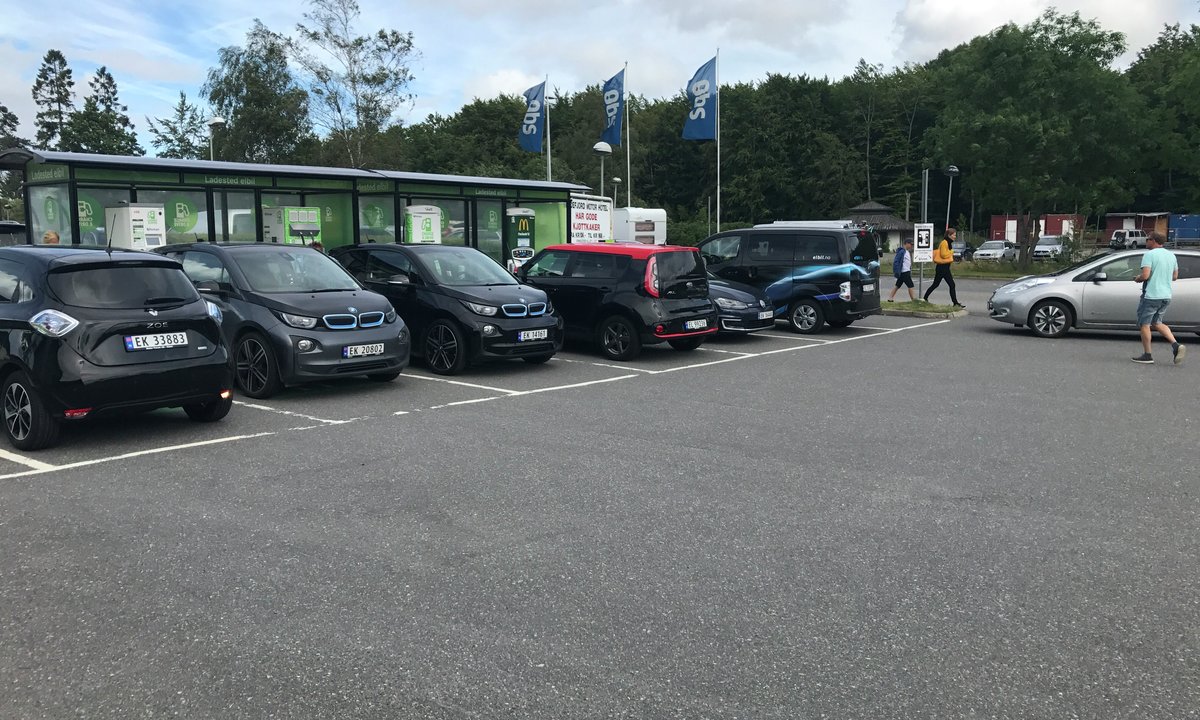
OHH: «I don´t like queues. Essentially I think it´s a two-part problem: One is the size of the battery. The other is what you need to build the infrastructure. You can divide today´s EVs by three: Small, medium and big batteries. Today most EVs except Teslas have small batteries. They don´t do long distance no matter how many chargers we build. That´s not what they’re for. It´s not going to be a smooth experience going to the cabin with a 24 kWh first generation Nissan LEAF. Then you have Tesla. Getting there, charging slowly overnight in the comfort of your cabin. That´s fine. It means there´s a problem in the medium segment. The cars may not get there, but will need one stop. They´re being sold enthusiastically by car dealers who say «you can get everywhere, there´s a great infrastructure». So if it takes five minutes to fill petrol and 20 minutes to charges, you increase the area needed by four. To serve the same number of cars. This has to be put out there to serve peak hours. Not only easter but other periods. And I can tell you: We´re not going to do that commercially. So here´s some prime consumer advice for y´all: Buy the car that suits your needs. If your primary need is going to the cabin, you should buy the big battery. Don´t buy the small one and hope we´re going to build 400 chargers. Because we´re not.»
The bigger question remains: What do you think as a reader? (Feel free to answer in Norwegian also.)
«Ole Henrik, I know you don´t like easter traffic…» (Laughs)
OHH: «I don´t like queues. Essentially I think it´s a two-part problem: One is the size of the battery. The other is what you need to build the infrastructure. You can divide today´s EVs by three: Small, medium and big batteries. Today most EVs except Teslas have small batteries. They don´t do long distance no matter how many chargers we build. That´s not what they’re for. It´s not going to be a smooth experience going to the cabin with a 24 kWh first generation Nissan LEAF. Then you have Tesla. Getting there, charging slowly overnight in the comfort of your cabin. That´s fine. It means there´s a problem in the medium segment. The cars may not get there, but will need one stop. They´re being sold enthusiastically by car dealers who say «you can get everywhere, there´s a great infrastructure». So if it takes five minutes to fill petrol and 20 minutes to charges, you increase the area needed by four. To serve the same number of cars. This has to be put out there to serve peak hours. Not only easter but other periods. And I can tell you: We´re not going to do that commercially. So here´s some prime consumer advice for y´all: Buy the car that suits your needs. If your primary need is going to the cabin, you should buy the big battery. Don´t buy the small one and hope we´re going to build 400 chargers. Because we´re not.»
The bigger question remains: What do you think as a reader? (Feel free to answer in Norwegian also.)
«Are you already starting to make a profit in the Norwegian market?»
OHH: «It´s a question of definition. If I was to run our existing network, and just run it, let´s say we just keep staff to do customer service and stop building more chargers. Yes, then we will be profitable. However, we don´t want to stop here. We want to keep growing. For that reason we´re not profitable as a company yet, because we´re still in the expansion and investment phase. But yes, actually we would be profitable if we wanted to.»
«I think we´ll start the further questions with IONITY and E.ON as you are new to the Norwegian market. Where are you planning to build the new fast charging stations? In cities? Between cities?»
TH: «We will build the infrastructure where the demand is, first of all. And we see that demand in destination charging is sort of covered. What we need right now is charging to connect cities and areas. The way we are entering the Norwegian market, for starters, is building the ultra fast charging stations across the Norwegian market.»
«Can you see in your customer data that people in cities are actually using the nearby fast chargers instead of charging at home?»
TH: «They are using it as a supplement. In the future it will shift. In the data we have seen from other markets, not being in the Norwegian market until now, there´s a shift towards using public charging more.»
«How large fast charging stations are you planning to build?»
TH: «The 20 stations will deploy 150 kW charging power. There will be 4-6 chargers in each location.»
Grønn Kontakt: «Competition is a good thing»
«And Jan, you have just started. Where is IONITY planning to build stations?» JHI: «We have come quite far in getting partners. We want be along highways, or close. We will have 350 kW charging power, meaning the car will get the charge it actually needs. While charging you can go to a restroom or have lunch on our locations. We will start with six charging points in each location, while also preparing to scale with increasing demand.» «Fortum and Grønn Kontakt… you already have a lot of fast charging stations. Many of them are quite small. Are you going to continue building small stations or build large stations like the ones I want?» (Laughs from the audience) OHH: «First of all. It´s a good thing that we´re getting competitors into this market. It´s necessary for the market to develop. And it´s a good thing that we get competitors that are doing things differently. IONITY brings something new to the market. That´s great for us, because we can learn from it. We completely agree that highway stations should be larger. We´ve also learned, the hard way, that to scale a fast charging station in a gas station is difficult. So it all boils down to where you locate the fast chargers. We´re going to follow what you do quite closely (in regard to IONITY) and see how customers react. We´re going to copy what works and discard the rest.» (Laughs and applause from the audience)«Norway is by far the leading country»
RS: «When we look at the stations we have today, and we were in the market early on, corridors between cities made sense. We´re listening very carefully to the customers, understanding their demands and needs. This means strengthening the network as it is. High power charging is the next step evolution in the market. We don´t consider moving just to high power as we believe there should be a mixture of charging capacities. We have started to build four stations connecting Oslo and Helsinki with a high power charging corridor. With that we´re of course learning a lot. It´s very much about listening to the customers.»
«Is there something specific you learn from the Norwegian market that influences how you do things in the rest of the world? You have a fast charging station in India, for instance.»
RS: «Norway is by far the leading country. It´s the only mass market in the world. We´re applying all the learnings into other markets. Last year we set up the first three chargers in India. Of course it´s a very interesting market.»
TH: «One of our most important learnings is that people don´t want to wait in front of a charger. Time will be one of the most scarce resources in the future. In that case we have learned from Tesla. When they deploy new stations they put up a lot of outlets. In the future no one will drive from Trondheim to Oslo or from Copenhagen to Munich and be aware that they need to wait 40 minutes to get access to a fast charger. Then the business will not survive. Therefore we need to deploy chargers that will allow people to charge when they get there. That means more chargers at once and build further when the market develops.»
IONITY wants to plug and charge like Tesla
«You touched upon consumers. The Norwegian EV Association organizes users. Of course when they don´t manage to find a charger they call us. When they find a charger, but it´s not working, they call us. When they find the charger and it´s working, but they´re not able to access charging, they also call us. This is a hassle. Why is it so, and what are you actually doing to improve on this?» (Laughter from the audience.) JHI: «There are coming many new customers into the market every month. They have to learn how to use the chargers, and in the first phase it´s very important that the car dealers tell customers how to charge the car. Even in the biggest dealerships this is often neglected. That´s a challenge. The second thing, when they come to charge, it´s important that charging is easy. That´s why we will offer «plug and charge». This means all you have to do is connect and then charging will start. I think that will really improve customer experience. It´s also important that chargers are not hidden in the dark corner. Our chargers will be visible, comfortable and attractive.» «That´s something new to the market, except the «plug and charge»-solution which Tesla already has. Ole Henrik; do you think charging is easy enough?» OHH: «No. That´s part of what we´re working on. There are three areas: One is the fact when you get to a petrol station you know what to do. Every single month there are 3,000 people or so who come to fast chargers for the first time ever. Noone has ever taught them what to do there. It´s a new thing. If you were to come to a petrol station for the first time ever, what you would see is just a confusing array of pistols and pumps. You might even fill propane on your car. That would be bad. Once you´ve figured out what to use, then you´re OK. We don´t think about that problem since we´ve grown up using them. We have cameras on all our fast chargers, for several reasons. One of them is to try to learn from user behaviour. It´s quite frustrating to watch when customers don´t get it. But our stations have instructions. No one reads instructions. (Laughs from the audience.) Especially not men. Typically they´ll be in the station for five minutes, cursing. Finally finding the number to customer service. As soon as they call us, we can help them. Next time they will know how to use it. It´s really about creating a good user experience the first time. If you get your problems solved the first time, you´ll realize it´s not as difficult as it seems. If your first experience is a disaster, then you´re in trouble. User experience is very important, and we have a long way to go to improve on that. It´s hardware made by engineers for engineers. It´s a technical thing. We try to «detecnify» it. Our customers are grandmas, parents, anyone. They don´t care what a kilowatt is. They just want it to work. It´s a challenge. We´re working on it. And we´ll get better.»«Hardware has made big steps forward»
«The chargers are expensive. Why don´t they work? Why is there a red light? It´s very annoying. You are buying expensive equipment, you should make sure it works!?» OHH: «We take great care in making sure it works. If it doesn´t work, that´s not OK. If you call from at fast charging station and you can´t charge it´s a major issue. You´re stuck with your kids, your dog and you´re missing your meetings. That´s not OK. Our job is to get people home. To do that we need to have a basic confidence in the network. It´s about redundancy. It´s about maintenance and fault response and correction when something goes wrong. For every station we have, there´s someone living no more than 30 minutes away. There´s always someone that can be dispatched to fix it. Occasionally the station´s really broken. Lightning, for instance. Then you need redundancy, a second station nearby. Thirdly: Hardware. We´ve been procuring hardware for some years. The hardware industry have had a way to go. Luckily they have become quite good at what they do. What we´re buying now is quite different from what we bought four years ago. From our point of view, we´re sorry about the people that have been stuck.»
«Do you agree it´s getting better?»
JHI: «Yes, it has improved a lot. I´ve been in the industry for seven years, and big steps forward have been made related to quality of the hardware. Quite a few weekends I´ve been driving around with the family, restarting chargers so they could work. That has become much better. But I agree with OHH that we still have a way to go. Still we can´t pick a charger that we know will work everytime. Moving to higher power could create new challenges, and we´ll have to see how that works. That´s why we´re having pilots around Europe testing different hardware suppliers to learn about the quality and to monitor functionality. It will help that we have at least six chargers in every location and that they will work independently. Even if one is out five will still (probably) be working. Redundancy is important. Our aim is that the chargers should work every time.»
TH: «You can´t guarantee that the chargers will work every time. Our learnings from the Danish market shows that we have improved a lot. The infrastructure needs to work. Otherwise you´ll have it on Facebook right away. And that´s such a bad image for us.»
Norwegian grid companies should simplify
«That´s good. Because I think in Norway your stations will be used a bit more. We heard this morning about the grid. That it may or may not collapse. From the Nordic perspective it´s not going to collapse. I know that you´re building stations in several countries. Is there a big difference in how easy it is to get grid access and how fast you can put the stations up?» JHI: «We have started now, focusing on the big corridors in Norway, Sweden and Denmark. We find it much easier to get access in Sweden and Denmark than Norway. To secure a grid connection is going quite rapidly. I would say about a month. In Norway it´s more challenging. It´s quite a big process before you get access, slowing projects down. You need to prepare and plan for a long time before you actually can install.» «So the Norwegian grid owners can learn from Sweden and Denmark?» JHI: «Definitely.» «Are any of you planning to use batteries as a buffer solution? Or is it just a pipe dream?» JHI: «We´re not planning battery usage in this area of Europe. But we´re looking into it in other areas, where connection is really expensive.» «Rami, you´ve been testing batteries in a couple of places. Are you planning to expand in this area?» RS: «At the moment we´re testing in a couple of locations, but not with quick chargers yet. In the Nordics it´s grid wise very well, but in other markets this is very much a topic to look into. In the end it´s a commercial decision, as grid companies normally are able to deliver. But there´s a price tag attached to that delivery.» «Is the grid a challenge, the way you see it?» TH: «The biggest problem is that it´s expensive. But we don´t see problems connecting and get the stations up and running. At the moment the capacity is there. In the more distant future the grid might need reinforcement in several places. But at the moment grid pricing is the biggest challenge.»
The very long output and battery argument
RS: «The grid companies have been doing what they´re doing for quite a while. Connecting consumers to the grid is what they do. I trust they will keep doing this in a changing market, also with decentralization of power production. This is a technical challenge that can and will be solved.» «As you saw yesterday, manufacturers like Nissan and Audi are going to launch cars with higher charging speeds and longer range. How do you see this influencing the need for fast charging?» OHH: «We use data to try and figure out what the customer needs today. Currently there are no cars out there that needs anywhere near 350 kW of power. We put up a 120 kW charger. Moving forward we know we will get bigger batteries and cars with longer range. They will need faster charging, but I´m a simple guy and there´s something I just can´t figure out: If you have a 100 kWh battery you can charge at peak a of 130 kW power (given the 1,3C factor, which is normal today). If you want to charge with 350 kW with 1,3 C, essentially you will need a battery pack with 280 kWh capacity. It will have a range of some 1,500 kilometers and weigh about a tonne. If you flip that, and say OK, what do you really need? Then you´re at 4 C. That´s a new electric chemistry. We thought OK; the Germans have something in their drawer which they´re not telling us about. They´re going to bring that out and launch a charging network first. But then we listened to Audi yesterday, and my impression is that´s not the case. They´re trying to put something out there which they will not make money deploying. It´s fairly expensive to build these things. The cost per kilometer is higher than for 50 or even 150 kW. So we´re not in a rush. Our data tells us that we don´t need 350 kW charging along the highways. What we need is 50 kW in the cities. There´s a massive need where people live. Wherever we put up a fast charger in Oslo it´s «on fire», which is good in our system. Whereas the corridors are not really being used that much. So yes; we will get to a scenario where 150 kW will be realistic. What we don´t understand: Why are we going there now? Why put our money in that part of the segment when we know there´s a huge need for the exact opposite. 50 kW in the cities. I don´t know if I can ask questions here?» (Laughs from the audience.) «Anyone who would like to reply?» TH: «We´re doing it as a supplement to 50 kW charging and 11-22 kW AC charging in cities as well. It´s a big puzzle with different parts. We´re doing 150 kW as a starting point. Getting to 350 kW is a puzzle whenever the car industry goes there. The challenge is that people are in a hurry, and don´t want to stand in front of a charger for an hour. Charging time is essential.»How about peak Easter traffic?
JHI: «I think there´s a need for high power charging. Not only in the city, but between cities, to enable long distance travels. I understand the environment now, with most cars having around 30 kWh batteries. But now they´re coming with bigger batteries and the opportunity for longer drives. Then you need to have faster charging. Tesla has already proven that for years. The problem with their stations is that you never know how much power you´re going to get. Then you can´t predict the charging time. That´s why you need enough capacity so you can guarantee the customer she can get the charging speed she needs. To deploy these cars into the market there must be a network that enables long distance driving. So we need both, slower fast charging in the cities for people without home chargers/smaller batteries and more power between the cities. Then people can manage with only a BEV. They won´t need the fossil car for longer trips.» RS: «Most of the vehicles today require 50 kW charging. And with the new vehicles coming to the market, it´s the next level of evolution. The costs of investing in high power charging are huge. That will of course have an impact on the pricing as well. What we have noticed when traveling longer distances, you want to have a break. You have a coffee or eat something, and it takes a while. Going up to 150-350 kW it will be a question: Are you willing to pay for that extra speed? Or are you in fact saying a normal charging break is good? Having the option, going to the future, will be great. Going to the hospital, you don´t want to wait 30 minutes. High power charging will be needed, especially in the premium segment. But yes; the question is relevant: How fast do we need to be?» «Definitely. But we haven´t talked about easter yet. That´s a question we get: How are we going to handle easter traffic? Is that why we need high power?» JHI: «I think that high power charging will help. We can handle more cars in shorter time, but this of course depends on market demand. It´s difficult to build these expensive stations to handle a couple of busy occasions during a year. So I think we also need to teach the customers the best habits. A lot of people drive up their cabin on Thursday, to avoid queues on Friday. Home office in the cabin on Friday. It will be a challenge, so if you´re able to drive a bit earlier or later things will be better to make demand more evenly spread during the day.» «So it´s partly about changing consumer habits but also faster charging?» JHI: «Yes, I think both are needed.» «And batteries with more capacity?» JHI: «Yes, because they make it possible to get all the way to the cabin. You can handle the distance without charging.»
«Ole Henrik, I know you don´t like easter traffic…» (Laughs)
OHH: «I don´t like queues. Essentially I think it´s a two-part problem: One is the size of the battery. The other is what you need to build the infrastructure. You can divide today´s EVs by three: Small, medium and big batteries. Today most EVs except Teslas have small batteries. They don´t do long distance no matter how many chargers we build. That´s not what they’re for. It´s not going to be a smooth experience going to the cabin with a 24 kWh first generation Nissan LEAF. Then you have Tesla. Getting there, charging slowly overnight in the comfort of your cabin. That´s fine. It means there´s a problem in the medium segment. The cars may not get there, but will need one stop. They´re being sold enthusiastically by car dealers who say «you can get everywhere, there´s a great infrastructure». So if it takes five minutes to fill petrol and 20 minutes to charges, you increase the area needed by four. To serve the same number of cars. This has to be put out there to serve peak hours. Not only easter but other periods. And I can tell you: We´re not going to do that commercially. So here´s some prime consumer advice for y´all: Buy the car that suits your needs. If your primary need is going to the cabin, you should buy the big battery. Don´t buy the small one and hope we´re going to build 400 chargers. Because we´re not.»
The bigger question remains: What do you think as a reader? (Feel free to answer in Norwegian also.)